
CHOOSE BY CATEGORY


ESTATE PLANNING
MOVING TO CANADA
REAL ESTATE
IMMIGRATION



CRIMINAL
Most Recent
Bridging Open Work Permits in Canada: Who Qualifies and How They Help You Keep Working
A Bridging Open Work Permit (BOWP) allows many permanent residence applicants to continue working in Canada while IRCC processes their PR application. Learn who qualifies, when to apply, common reasons applications are refused, and how to protect your ability to work legally.
How a Criminal Charge Can Affect Your Immigration Status or PR Application in Canada
A criminal charge can have consequences far beyond the courtroom. Whether you are a temporary resident, permanent resident, refugee claimant, or applying for permanent residence, criminal proceedings may affect your immigration status, admissibility, and future in Canada. Learn how criminal law and immigration law intersect, and why obtaining legal advice early can make a significant difference.
How to Fight an Alberta Immediate Roadside Sanction (IRS) Notice of Disqualification
An Alberta Immediate Roadside Sanction (IRS) can result in an immediate licence suspension, vehicle seizure, and significant penalties. Learn how IRS notices work, the review process, and potential grounds for challenging a Notice of Disqualification.

What Are Your Rights When Questioned by Police in Edmonton?
Do you have to answer police questions in Edmonton? Learn about your right to remain silent, your right to a lawyer, and what to do if police contact, detain, or arrest you.
How the Alberta Alternative Measures Program (AMP) Can Help Keep Your Record Clean
A criminal charge does not always lead to a criminal record. Learn how Alberta’s Alternative Measures Program (AMP) works, who may qualify, and how successful completion can help eligible individuals avoid a criminal conviction.

Estate Planning in Alberta: Protecting Your Family, Assets, and Wishes
Estate planning is more than preparing a Will. Learn how Wills, Enduring Powers of Attorney, and Personal Directives can protect your family, assets, and future in Alberta.

When Is the Right Time to Get a Will in Alberta?
When is the right time to get a will? Many people assume estate planning is only for retirees, but a will can be essential as soon as you own property, have children, get married, or begin building wealth. Learn why creating a will early can protect your loved ones and provide peace of mind.

Personal Directives in Alberta: Planning for Future Personal Care Decisions
A Personal Directive allows someone you trust to make important personal and healthcare decisions on your behalf if you lose capacity. Learn how Personal Directives work in Alberta and why they are a key part of estate planning.

Power of Attorney in Alberta: What It Is and Why You Need One
A Power of Attorney allows someone you trust to manage your financial affairs if you become unable to do so yourself. Learn how Powers of Attorney work in Alberta and why they are an essential part of any estate plan.
Misrepresentation in Canadian Immigration: Understanding the Five-Year Ban
A finding of misrepresentation can lead to a refusal and a five-year ban from Canada. Learn what constitutes misrepresentation, common mistakes that trigger allegations, and what options may be available if you receive a Procedural Fairness Letter or refusal.

You Received a Procedural Fairness Letter: What It Means and Why You Should Take It Seriously
Received a Procedural Fairness Letter from IRCC or CBSA? Learn what a Procedural Fairness Letter means, why you received one, and how to respond before a decision is made on your immigration application.
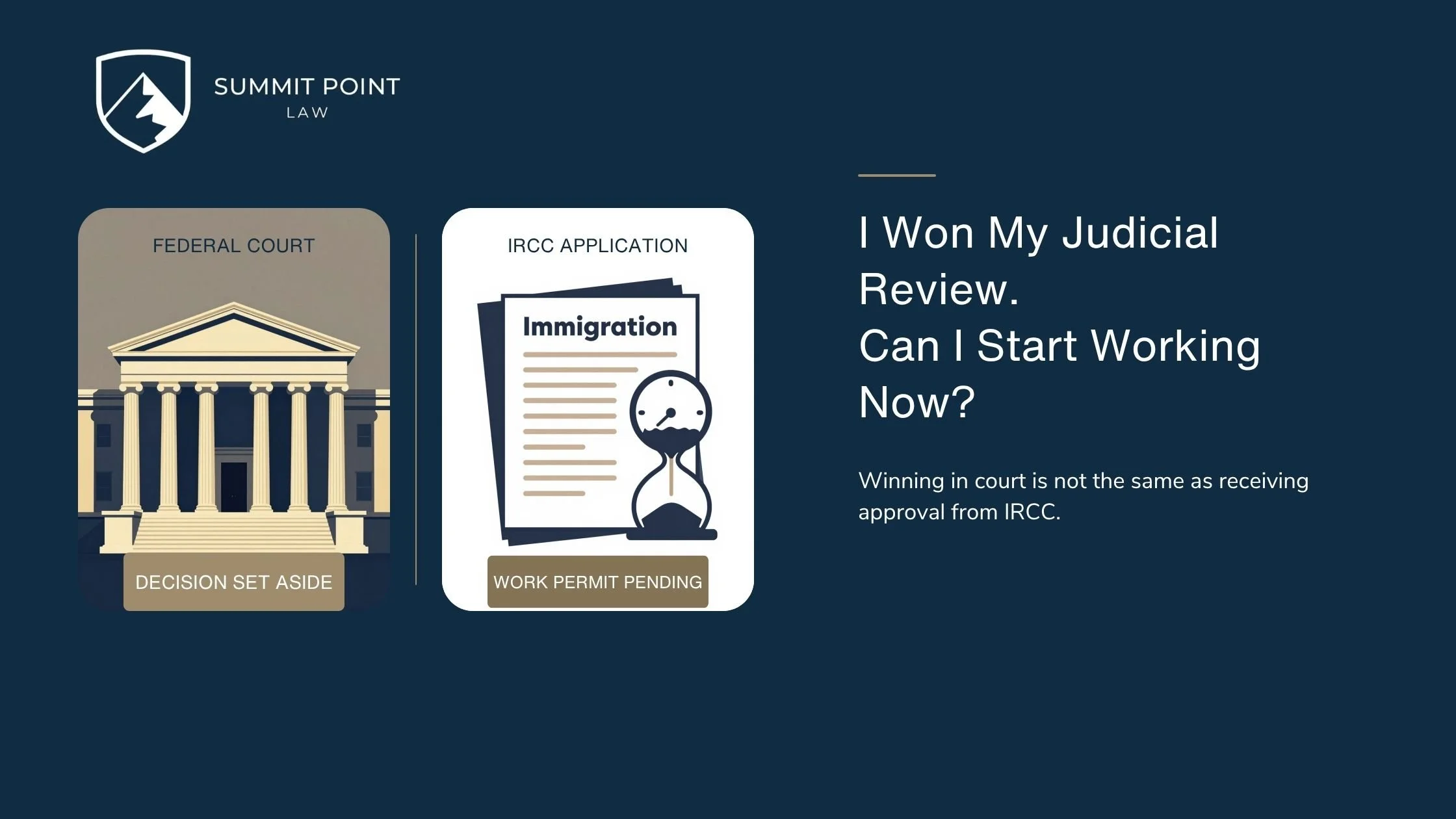
I Won My Judicial Review. Can I Start Working Now?
Many applicants believe that winning a judicial review means they can immediately begin working in Canada. In reality, a Federal Court order setting aside a refusal and sending the matter back for reconsideration does not grant a work permit. Learn what a successful judicial review actually means and why work authorization remains a separate issue.
Myth, Fact, or It Depends? Three Common Canadian Immigration Misconceptions
Think you know Canadian immigration law? Some of the most common assumptions about sponsorship, permanent residence, and maintaining status in Canada are actually misconceptions. In this article, we separate myth from fact and explain why immigration lawyers so often say, "it depends." Understanding the nuances of Canadian immigration law can help you avoid costly mistakes and make informed decisions about your future in Canada.
Understanding Property Ownership: Joint Tenants vs Tenants in Common
Purchasing property with another person involves more than deciding who pays what. The way title is registered can have significant consequences for inheritance, estate planning, and future ownership rights. Learn the key differences between joint tenancy and tenancy in common, and how to choose the ownership structure that best aligns with your long-term goals.

The Real Estate Conveyancing Process: What to Expect
Buying or selling real estate involves more than signing paperwork. Conveyancing is the legal process that ensures ownership is transferred correctly, financial obligations are addressed, and your transaction closes smoothly. Learn what buyers and sellers can expect during the conveyancing process and how a real estate lawyer helps protect your interests every step of the way.
Immigration Application Refused? Understanding Judicial Review Applications
Immigration application refused? Learn how judicial review applications work, important filing deadlines, what the Federal Court reviews, and what happens if your judicial review is successful.

Facing Removal from Canada? Understanding Stay of Removal Motions
If you have received removal instructions from CBSA, time is critical. A stay of removal motion may temporarily prevent removal from Canada while the Federal Court considers a related immigration proceeding. Learn what a stay of removal is, when it may be available, and what happens if the Court grants or denies the request.

Detained by the Canadian Border Services Agency? Immigration Detention Review Process Demystified
Immigration detention can be a frightening and uncertain experience for both the detained individual and their family. If someone is detained by CBSA, they have the right to a detention review hearing before the Immigration Division. Learn how the detention review process works, what to expect at a hearing, and how release decisions are made.

Canada’s Refugee Protection Claim Process: From Application to Decision
Canada offers refugee protection to individuals who face persecution, torture, or other serious harm in their home countries. However, the refugee claim process involves strict legal requirements, detailed documentation, and important deadlines. Learn what qualifies someone for refugee protection, how to make a claim, and what happens after a decision is made.